In Houston we are lucky to have a legacy of amazing baseball stadiums. This legacy began with the 8th wonder of the world, the Astrodome. An 18-story building would fit inside its 710-foot diameter, its 9 acres of real estate, and its steel-beamed ceiling that rises 208 feet above the baseball diamond. To light up the field requires more electricity than is used by a city of 9,000 people, and the central air-conditioning has to circulate 2.5 million cubic feet of air a minute. Engineers actually claimed to have been able to make it snow inside the Astrodome because of the abundance of air conditioning capacity. An interesting bit of HVAC trivia is, in its inaugural 1965 season, the Astrodome was the scene of a unique groundskeeping argument.

The New York Mets claimed that the groundskeepers were "roofkeeping" as well by manipulating the air conditioning system so that the air currents helped the Astros longballs and hindered visitor's homers. Over the years this modern marvel became dated and the city decided to move on. The last Astros game was played at The Dome on October 9, 1999 and after years of patronage Houstonians moved on to a new and improved stadium with a remarkable development, the retractable roof. Are there any indoor MLB stadiums in the game as of 2020? The answer is quite a few, but most have retractable roofs. I went to the Tampa Bay Rays Stadium to watch the New York Yankees play against the Rays in a domed stadium.

A domed baseball stadium would be a new experience for me, so there was a lot of excitement for my trip. People have negative thoughts about indoor baseball games and indoor ballparks, but this was my second time catching a match under a covered field. Here are my thoughts of indoor baseball, why I think covered baseball stadiums are a good idea, and more. With a retractable roof that is open on the sides, "The Safe" allows teams to play outside even in the pouring rain. Like a lot of ballparks built in the 1990s and onward, this field has a retro-modern design with a brick façade, asymmetrical construction and natural grass field. In addition, it also boasts one of the largest video scoreboards in the game (57 feet high by 201.5 feet wide).
Lookout Landing in left field and the Outside Corner Picnic Patio above the home-plate gate entrance provide fans with breathtaking views over the Puget Sound. Fans can watch the Mariners take on their opponents or gaze out over the water and the downtown Seattle skyline. Nationals Park is located in southeast Washington, DC, along the fast developing Capitol Riverfront. Visiting ballgame-goers will be surrounded by parks, shopping, restaurants and a short walk back to your boat. The park opened in 2008, shortly after baseball returned to the U.S. capital, and is noted for its sleek, glass-and-steel design. With a seating capacity of 43,341, fans can enjoy amenities including luxury and suite seats, the PNC Diamond Club restaurant and a play area for children.

Fittingly, 14 Japanese Cherry Blossom trees inhabit the centerfield plaza and left field concourse, making for a beautiful spectacle during the spring season. Nationals Park was the first major league stadium to be LEED Silver Certified by The U.S. Green Building Council and incorporates a variety of recycled and sustainable elements. Houston's new domed stadium--the first major-league indoor baseball park--is nearing completion and will be ready for the first game of the Houston Colts this spring.

The stadium is a domed circular concrete and steel framed building with an adequate playing field for both baseball and football. Covering an area of over nine acres, the structure has an outer diameter of 710 ft with a clear span of 642 ft. The roof rises to a height of 202 ft above the center of the field. Seating up to 66,000 can be arranged to accommodate any type of sport or meeting from rodeos to national political conventions.

Some 10,428 seats at field level are contained in two stands which rotate 35 degrees from baseball position to parallel for football position. The home of the Padres celebrates the natural beauty, cultural diversity and unique spirit of San Diego. The perimeter of the white steel and sandstone structure is lined with beautiful palm trees, adding even more color to the city's picturesque backdrop. The Park at the Park, a grassy berm sloping above the outfield fence, is open during game time and allows fans to sit and watch games for $10. The 100-year-old Western Metal Supply Co. building was incorporated into the design of the ballpark and contains a team store, private suites, a restaurant and rooftop seating. Comerica Park – The opposite of Minute Maid was built by Populous in Detroit.

The successor to the iconic Tiger Stadium, Comerica quickly earned its reputation as a pitchers' paradise. Except for center field, all the distances from home plate were deeper than any in the hitter-friendly Tiger Stadium. Tigers outfielder Bobby Higginson famously nicknamed the new ballpark "Comerica National Park" because of its vast outfield expanses. Comerica is unique in baseball as the southern-most facing park in baseball. Miami is a modern, eclectic city, and Marlins Park is no different.
The long list of highlights includes not only a retractable roof, but also retractable glass panels in the outfield as well. Dual aquariums with live aquatic life serve as a impressively original home-plate backstop, and a one of a kind feature in the league. The Clevelander Bar can be found in left field, holding up to 240 guests and has food, entertainment and even a swimming pool. Behind the fence in centerfield, a colorful, 75-foot-tall sculpture has moving waves along the bottom that displays celebrating marlins, seagulls and flamingos each time a Marlins player hits a homerun.

The Art Deco-inspired building is a short walk from the Miami River, which provides access to Biscayne Bay. Steel trusses, an arched brick façade, a sunroof over the gentle slope of the upper deck, an asymmetrical playing field and natural grass turf are just some of the features that tie it to the magnificent ballparks of yesteryear. One of the most notable features of this grand-stand for boaters to consider — Baltimore's Inner Harbor is just a 10-minute walk away. Leave it to the stalwart city of Boston to have the oldest and one of the most recognizable ballparks in the big leagues. Fenway has withstood two fires, the "Curse of the Bambino" and the mounting pressures of modernization to remain the beloved home of the Boston Red Sox since 1912. The famed "Green Monster" was born in 1947, with the dark green painted, 37-foot-tall left field wall still being one of the stadium's defining features — now with 250 bar-style seats on top.

While the ballpark can hold up to an impressive 37,600 fans, it's the nostalgic setting that makes Fenway Park so special. The park is located near the shores of the Charles River in the Fenway/Kenmore neighborhood. The original home of the Toronto Blue Jays was part of the massive Exhibition Place grounds and was best used for football. While it provided wide-open views for baseball, the lowest rows of seating were still rather far from the playing field, as was the case with most fields that were initially built for football. An open-air stadium, along Lake Ontario, also made for some harsh cold-weather, windy days and nights early and late in the season.

While not an easy place to watch baseball, Exhibition Stadium's unintended quirkiness takes us back to a simpler time in baseball history where amenities weren't that big of a deal. Marlins Park is the target of routine derision, but much of the stems from the team's play and management and the lack of an energized fan base. It opened in 2012 and you can forget finding brick, limestone, or green padding—the signature materials in ballpark design.
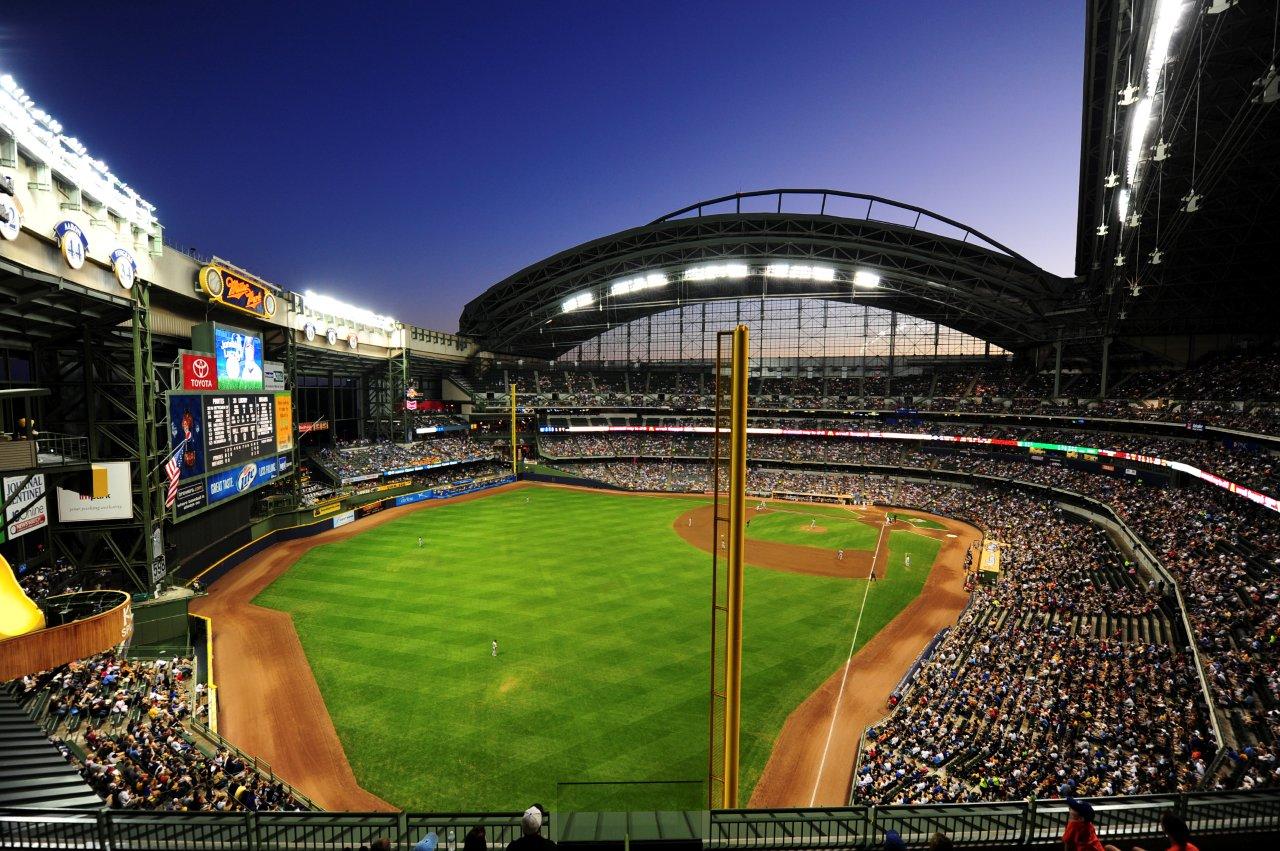
Marlins Park goes quintessential Miami and is one of the first efforts at a modern baseball stadium that didn't embrace retro features. There are six massive glass panels in the outfield, a retractable roof, and a Populous design that sets the stadium apart. At least give Marlins Park points for going a different direction. Oriole Park at Camden Yardsis considered one of the first retro ballparks introduced to Major League Baseball when it was erected in 1992.

Camden has plenty of attributes that make it a wonderful place to watch a professional baseball game. Not only are you close to Baltimore's Inner Harbor which features tons of fabulous dining but the downtown skyline is in sight as is the rustic B&O Warehouse in right field. Just beyond the outfield gates is Eutaw Street, a pregame block party. While in town, schedule a pre or post game visit to Dempsey's Restaurant, a staple hangout for Orioles and Baltimore Ravensfans.

Also, while you're in town, be sure to check out the Babe Ruth Museum just down the street. Baltimore Orioles tickets are also among the most affordable in Major League Baseball. Add all of this to a loyal and dedicated fan base and you have one of the best atmospheres in Major League Baseball. Don't forget, Baltimore is only 45 minutes from Washington, DC, which makes the possibility of seeing Camden Yards and Nationals Parkon the same trip very easy. Nicknamed the "Eighth Wonder of the World," the Astrodome was built to protect an entire sports area suitable for baseball and football, with seating for 66,000 spectators. The Lucite-paneled dome, spanning 642 feet , is supported by a steel lattice.

The entire interior is air-conditioned at 74 °F (23 °C) and fully lighted with power from its own electricity-generating system. The playing field, constructed 30 feet below grade, spans 150,000 square feet. When built, the stadium included an electronic scoreboard measuring 60 × 300 feet (18 × 91 metres) and was the first arena to have luxury "box" seating, a feature included in almost all subsequent large-scale stadiums in the U.S. Target Field – After 28 seasons in the Metrodome, the Twins ventured back outside in Minneapolis in 2010, playing in their own baseball-specific ballpark for the first time in team history.

Despite the weather conditions in Minneapolis that prompted the construction of the Metrodome in 1982, Target Field was not constructed with a retractable roof, although it does contain heated viewing areas. Target Field pays homage to Twins history via a large "Minnie and Paul" replica, with the pair shaking hands while alit by strobe lights when a Twins player hits a home run. That left-field area also became famous for yielding home runs, as Minute Maid quickly earned a reputation as a hitters' park.

This gave the city much-needed momentum to pass a ballpark funding initiative leading to T-Mobile Park's construction, replacing the aging and obsolete Kingdome. As opposed to the concrete tomb of the 1970s, T-Mobile Park had the feel of other retro parks that dotted the landscape in the 1990s, as designed by NBBJ. Among features like a manual scoreboard in left field, T-Mobile Park became known for the railway beyond the left-field stands. Trains routinely announce their passing behind the park with whistle blasts, which are common during games. T-Mobile Park also set a new standard for concessions, offering the widest variety of fare in baseball, from traditional hot dogs to sushi and pad Thai. Forbes Field wasn't the first home of the Pittsburgh Pirates or the last.

It was, however, the first steel-and-concrete stadium built in the National League. The playing field at Forbes Field was quite large, and there was a batting cage sitting in the farthest portion of center field for players to use during games. Oftentimes, fans were allowed to sit on the deepest parts of the outfield grass on days when overflow seating was necessary. The Pirates won three of their five World Series titles while playing at Forbes, most notably in 1960 on Bill Mazeroski's walk-off homer in Game 7. It's rather sad to think a ballpark that was built in the 1990s no longer houses a major-league baseball team. That proved to be the case here, where Rangers certainly upgraded from Arlington Stadium to a solid, retro-classic park.

However, the summer Texas heat is still an issue and the ownership felt a venue with a retractable roof like the new Globe Life Field would draw more fans. From an amenities and game-experience standpoint, Globe Life Park in Arlington, originally known as The Ballpark in Arlington did the job. Tropicana Field is the only current major league baseball stadium to be a dome. There are a handful of other stadiums in the game that have a retractable roof, however. Minute Maid Park, Blue Jays Stadium known as Rogers Centre, Marlins Park, the new Globe Life Park, Miller Park, T-Mobile Park, and Chase Field all have retractable roofs.

Located in the SODO section of Seattle, Washington,T-Mobile Parkis one of the more unique and scenic MLB stadiums out there. SODO is an acronym for south of downtown and is also home to CenturyLink Field, home of the Seattle Seahawks. The main aspect that distinguishes this venue from other MLB stadiums is definitely the retractable roof in which it was one of the first to adopt. The roof is a necessity in Seattle due to the high frequency of rain from the breezy Pacific Ocean. There are five levels of seating at T-Mobile Park including two bleacher sections in center field.

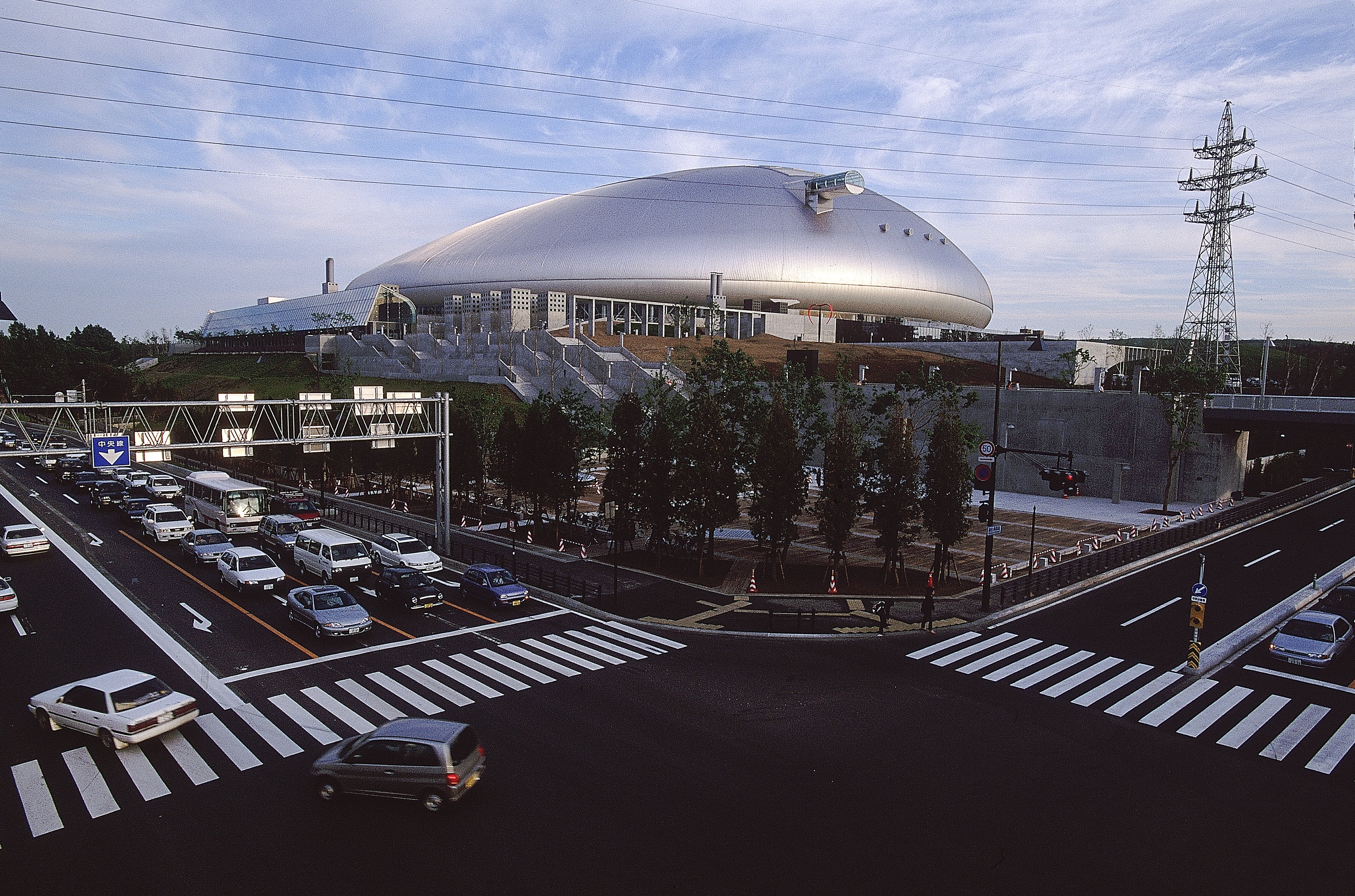
The upper levels offer a nice view of the Seattle skyline. Due to it's location in the Pacific time zone, T-Mobile Park may be unfamiliar territory to most Major League Baseball fans but make no mistake about it; it's a gem. The photo above is Tokyo Dome, Yomiuri Giants' home stadium where is located in the Bunkyo ward in Tokyo. There are 6 domed stadiums in Japan where professinal baseball teams have games. Besides baseball games, domed stadiums are used for other various events such as American football, pro wrestling, concerts and exhibitions. I think that the reasons why domed stadiums are adopted in Japan because the land prices are high and it can always do something regardless of the weather.

The average annual precipitation in Tokyo is 1,500 mm which is twice as large as that of the globe. If you are interested in domed stadiums, I would like to take you to Tokyo Dome. The relationship between teams and their surrounding urban environment — good or bad — has created some of the most memorable and familiar features in ballpark design. Fenway Park's iconic 37-foot-high "Green Monster" wall in left field began in part as a spite fence to prevent freeloaders from watching games from nearby buildings. Wrigley Field's rooftop viewing sections represent the concession to that same kind of viewing.

While those examples are more than a century old, the tension between teams and towns remains. Notice that we didn't include a metric here for the relative tolerability of fans in the ballpark -- because if we did, Citizens Bank would rank 25th at best. Philly fans aside, the park boasts a hell of an outfield bar that's packed even on weekdays, serves authentic Philly cheesesteaks, and plays host to a team that's won 53% of its home games this decade. Citizens Bank is also 2017's major league leader in attendance, filling over 100% of seats, which maybe explains why people are always just a liiiiiittle on edge.

Another brainchild of Populous, the park featured a mini-Green Monster in left field, varied outfield distances and fence heights and a distinctive set of vertical light towers, which preserved a view of the downtown skyline. The new park changed the fortunes of the franchise, as the Indians, long a cellar-dweller in the American League Central, reached the World Series in two of the park's first three full seasons. A glistening new baseball stadium is taking shape amid downtown buildings and rising along with the concrete and steel are hopes the city may one day be home to a major league team. Sorry, Houston, but the most memorable thing about your park was the hill in center field, and now that's gone. The stadium may be downtown, but it was not an easy place to navigate as a pedestrian, and there weren't a ton of places to go nearby.
It probably doesn't help that we saw an absolutely abysmal Astros team that lost 107 games. I feel like other parks have stepped up their merchandise in the years since, but, to this day, I still covet one of those old school Astros jerseys. Tropicana Field is the only domed stadium in baseball, as well as the only one to have a 35-foot touch tank where fans can pet rays as they swim around in 10,000 gallons of saltwater. The home of the Tampa Bay Rays is very unique in that its exterior roof is slanted; a feature designed to reduce cooling costs and better protect the stadium from hurricanes. The on-site Ted Williams Museum & Hitters Hall of Fame displays different artifacts and pictures, and also hosts various traveling exhibits throughout the year. Tropicana Field is located just a few blocks from downtown St. Petersburg on Tampa Bay.

How Many Domed Baseball Stadiums Japan's oldest stadium was built to host the high school national championships and still does, but it also hosts the Hanshin Tigers. Stepping into Hanshin Koshien Stadium is a real blast from the past, opening in 1924, it's design was influenced by the long gone Polo Grounds in New York. It is a great experience to watch a professional baseball game, but the biggest crowds can still be found at the Summer Koshien, high school baseball championships. This is the place where dreams are made for young Japanese ballplayers and where legends like Hideki Matsui and Daisuke Matsuzaka established themselves.
The stadium thumbnail diagrams on this page are arranged in seven "classes" to facilitate a graphical and descriptive comparison of stadiums having like origins. The groupings I have devised are mainly chronological but partly structural and functional, as explained by the "Distinguishing features" text box at the upper right of each section. Some stadiums have been reclassified, and this page is subject to further revision. For each class of stadiums, there is a table of descriptive comparisons, with categories appropriate to that class. Following each table is a list of generalizations, based mainly on those categories.
Estimated distances and compass directions from each stadium to the city center are shown for each stadium, and the average distance for each class is given at the top of the lists of generalizations. PNC Park – Opening to wide acclaim, the Populous-designed PNC Park is one of the most scenic in all of baseball. The upper deck area affords a panoramic view of downtown Pittsburgh, as well as the Roberto Clemente Bridge beyond left-center field.

PNC Park was also the first to feature an out-of-town scoreboard providing full information, including score, inning, number of outs and baserunners. A product of its time, PNC Park was built in less than 24 months, the fastest ballpark construction in history, aided in the process by the use of computer technology. My first indoor baseball game was at American Family Field out in Milwaukee in 2012. The seats that my brother and I had were deep in left field and under the overhang. I believe that all new baseball stadiums should have a retractable roof. The oldest park in the game, Fenway Park, won't have this option because there is no space in the city to install the retractable roof.